Tuesday, April 23, 2019

7 Ways to Finance Your Dream Bar

BY. Loren Bornstein

So you want to open a bar…how are you going to pay for it?

In nearly a decade of working behind the stick (behind the bar), I’ve had many a customer talk about how they want to open a bar. A few even spoke to me about helping them open it. But when we start to talk beyond dreams, most don’t want to talk about the reality behind it all. The reality being finances.
For those of you serious about owning a bar, it’s imperative you do the research to understand all the options available to finance your business. I asked Dave Bertelo, who spoke at length about red flags in bar failures, about what it takes to finance your own bar. He and his partner just secured funding for their own bar, thanks in part to a private investor. Dave gave me a list of the various financing methods they considered.
Take notes, my ambitious industry enthusiasts and entrepreneurs!

When it comes to starting any business, you need to be serious about money. Your options are pretty varied, some of which include: the SBA, micro loans, crowd source funding, home equity loans, private investor, self-raised funds, credit cards, and merchant account funding.
I know a lot of these terms are intimidating. Thankfully, Dave gave better explanations of each for you:
SBA (Small Business Administration)
What is it? The Small Business Administration is a great place to start when looking at loans for your bar. The 7(a) Loan Program is SBA’s primary program for helping start-up and existing small businesses, with financing guaranteed for a variety of general business purposes—including your new bar!
Benefits: The money isn’t coming out of your own pocket and there are regulated interest rates, so they can’t just change on you should your financial stability also change. This is a great starting point for many a person intent on opening a bar.
Hazards: A downside is many banks don’t offer these loans. There is a lender match attachment to SBA’s website which helps deal with finding a good lender, but, as Dave and his partner found out, a lot of banks don’t offer these loans unless you are also interested in purchasing the real estate too—which is usually way above the money many potential bar owners can shell out.
Ideal Lendee: You need to have a professional quality business plan and demonstrate financial competency. Talk to a few banks and financial advisors to get a better understanding before starting the loan process.

Thursday, April 18, 2019

Does your business need an alcohol beverage license to serve free drinks in Florida?

Original article by. GrayRobinson PA


Image result for WINE IN A NAIL SALON
Who doesn't enjoy a sipping a glass of wine during a relaxing pedicure--especially if that glass of wine is free?
While there is no such thing as a free lunch, offering a free drink to customers is a practice regularly seen at a variety of businesses, including at beauty salons, gyms, and upscale boutiques. But is this activity legal, or do these businesses need an alcohol beverage license before serving an alcohol beverage to patrons?
Under Florida law, "[i]t is unlawful for any person to sell alcoholic beverages without a license . . ." Fla. Stat. 562.12(1). "Sale" or "sell" is defined as "any transfer of an alcoholic beverage for a consideration, any gift of an alcoholic beverage in connection with, or as a part of, a transfer of property other than an alcoholic beverage for a consideration, or the serving of an alcoholic beverage by a club licensed under the Beverage Law." Fla. Stat. 561.01(9). This law comes with serious consequences, as selling alcoholic beverages without a license in Florida is a seconddegree misdemeanor. See Fla. Stat. 562.12(1).
Florida courts have interpreted the definition of "sale" or "sell" broadly. For example, in the case Dept. of Bus. Reg., Div. of Alcoholic Beverages & Tobacco v. Cost Plus Imports of Tampa Bay, Inc., 513 So. 2d 763, 764 (Fla. 2d DCA 1987), Second District Court of Appeal found that furnishing alcoholic beverages in connection with a limousine rental was a sale within the meaning of Fla. Stat. 561.01(9). This is because the patron paid to rent the limousine, which is consideration (or something of value in exchange) for the alcoholic beverages. Id. According to the Division of Alcoholic Beverages and Tobacco ("DABT"), the entity that regulates Florida alcohol beverage retailers, distributors, and manufacturers: "Any payment for services or products which provides the access to the alcoholic beverage is not considered complimentary (costing nothing) and thus is considered a sale of alcoholic beverages and requires a license."1
So for example, if a patron pays for a pedicure at a salon and is offered a free glass of wine, it is considered a sale and requires licensure. But if the patron does not purchase a pedicure or any other service at the salon, and is still offered a free glass of wine, it is probably not a sale. Alcoholic beverages can be expensive, and if a salon only wants to serve drinks to paying customers, it should obtain an alcohol beverage license.
All businesses that serve alcoholic beverages to patrons should review Florida's alcohol beverage laws and regulations, and consult with a Florida alcohol beverage attorney to help comply with Florida's alcohol beverage laws and regulations. 

Wednesday, April 17, 2019

‘Stillpubs’ — brewpubs for liquor — could be coming to Illinois as craft distiller licensing bill clears state House

BY.

Like brewpubs? Get ready for stillpubs.
Legislation approved Thursday by the Illinois House would license craft distillers similar to the way craft brewers are regulated, with the aim of giving a boost to the burgeoning community of artisan spirits makers in the state.
The bill, which still faces a vote in the Senate, would create a license that allows small distillers to self-distribute some product, removing a major hurdle for unknown brands trying get on store shelves, and another license that allows distillers to open up to three satellite locations where they can serve their house-made spirits as well as other alcohol in a pub environment.
The changes would allow craft distillers to build brand awareness and new revenue streams, helping them grow and encouraging new distillers to set up shop in the state, said Noelle DiPrizio, who co-owns Chicago Distilling in Logan Square.
“Based on our surrounding states it would make us one of the more favorable states to start a business,” said DiPrizio, president of the Illinois Craft Distillers Association, which pushed for the bill.
There are 34 businesses federally licensed as craft distillers in Illinois, up from 2 in 2010, DiPrizio said. If the bill becomes law, that number “could double very quickly,” she said.
For her business, the new rules could mean drawing customers with what she calls a “still pub” in hipster Logan Square while moving production to a less pricey neighborhood. While Chicago Distilling has a tasting room that serves cocktails made with its vodka, gin and whiskeys, it can’t serve booze it doesn’t make.
“Often I’m turning away private events because I can’t also provide them with wine and beer as an option,” DiPrizio said.
Nick Nagele, co-founder of Whiskey Acres in DeKalb, said the ability for some distillers to sell their products directly to retailers will also be a game-changer. Some distillers are located in parts of southern Illinois that aren’t serviced by distributors, and others are so small that they need to establish some accounts before a distributor will take them on, he said.
But, he added, “this legislation is not a way for us to get away from the three-tier system” in Illinois that requires manufacturers to sell to wholesalers that in turn sell to retailers. “We do not want to become a delivery organization.”
The Wine and Spirits Distributors of Illinois initially opposed portions of the bill but after a series of negotiations got on board.
“WSDI appreciates the discussions we have been engaged in with the craft distillers guild and believe that the bill as passed out of the house today represents an agreement that fairly established a long term plan for craft distillers in Illinois,” said Executive Director Karin Lijana Matura.
The bill passed the house 108-2.
Rep. Mike Zalewski, D-Riverside, co-chief sponsor of the bill, said the legislation creates parity with the booming craft beer industry by creating a two-tier licensing system.
A Class 1 license permits a distiller that produces no more than 50,000 gallons per year to self-distribute or sell directly to consumers from their tasting room up to 5,000 gallons of spirits made on site. They can also purchase vermouth from a licensed distributor for use in cocktails at their tasting rooms.

Monday, April 15, 2019

Duopoly or pro-business? Shots taken in liquor distribution fight

liquor distribution

By. Tress Savage

The difference between “shall” and “may” in one portion of Oklahoma’s new alcohol laws has left liquor stores, a locally owned wholesaler and some legislators pushing to break up what they call a duopoly in the liquor distribution market.
Thanks to a few lines of amendment within voter-approved SQ 792, the nation’s top brands of liquor now distribute their products in Oklahoma exclusively through either Central Liquor Company or Jarboe Sales Co., two longtime Oklahoma businesses that struck deals with national distributors: Republic National Distributing Company (RNDC) and Southern Glazer’s Wine and Spirits, respectively.
The change dramatically hurt the business of Tulsa-based Boardwalk Distribution and other now-defunct wholesalers, and the Retail Liquor Association of Oklahoma says the effect on liquor stores has been equally problematic.
“These people who have exclusive rights to these spirits and these wines have continued to slowly decrease service and slowly increase price,” said RLAO President Bryan Kerr, owner of Moore Liquor. “The sharpest part of that knife pokes at the rural areas where they have really seen severely reduced service and availability of product since the passage of the law.”
To address similar concerns from other liquor stores and Boardwalk Distribution, Rep. Chris Kannady (R-OKC) dropped language into SB 608 on April 2 that would define “top brand” as one of the 25 most-sold spirits and wines over a 12-month period. The bill would require manufacturers to sell those top brands to any wholesaler wanting to purchase and distribute them.
Kannady joined Kerr in saying reduced wholesaler competition has allowed RNDC and Southern Glazer to reduce delivery frequencies and quantities while increasing bottle-handling fees.
“I have not had a single liquor store say they are against it,” Kannady said of his language in SB 608. “Restaurants have the same problem. You’ll have restaurants in downtown Oklahoma City who run out of product because they’re not getting deliveries. So if that’s happening in Oklahoma City, imagine what’s happening in rural Oklahoma.”Continue Reading

Saturday, April 13, 2019

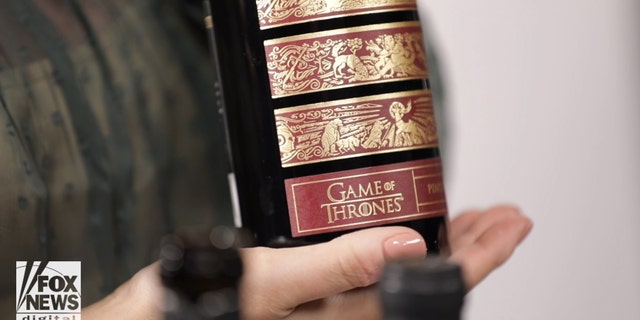
Official 'Game of Thrones' wine collection just in time for Season 8!

Celebrated winemaker Bob Cabral said that if he ever crafts another "Game of Thrones" wine, he would aim for one that would represent the entirety of Westeros.

As Tyrion Lannister matter-of-factly tells Jon Snow, “Everything is better with wine in the belly.” And as it turns out, the folks behind HBO's “Game of Thrones” believe that principle extends to the show itself, too.
Thanks to acclaimed winemaker Bob Cabral, fans can now enjoy sipping official wines that embody the spirit of the series and its characters, imbibing fine wines just as their favorite characters often do on-screen. 
HBO first teamed up with Vintage Wine Estates (VWE) and Cabral in 2017 to create a set of wines for its blockbuster show. That selection included a Chardonnay, a Cabernet Sauvignon, a red blend and later a Pinot Noir, which was added to the collection in 2018.
“Vintage Wine Estates & I presented a couple of initial wine blends to HBO to facilitate the discussions of collaborating on this project,” Cabral tells Fox News. “Once they met us all face-to-face and we tasted the blends, the deal was pretty much set. HBO and the winemakers at VWE, that I work directly with, have been a dream to work with.”

Friday, April 12, 2019

Posted By: Jules ScullyContinue below
Craft Brew Alliance to introduce low-alcohol seltzer range in July

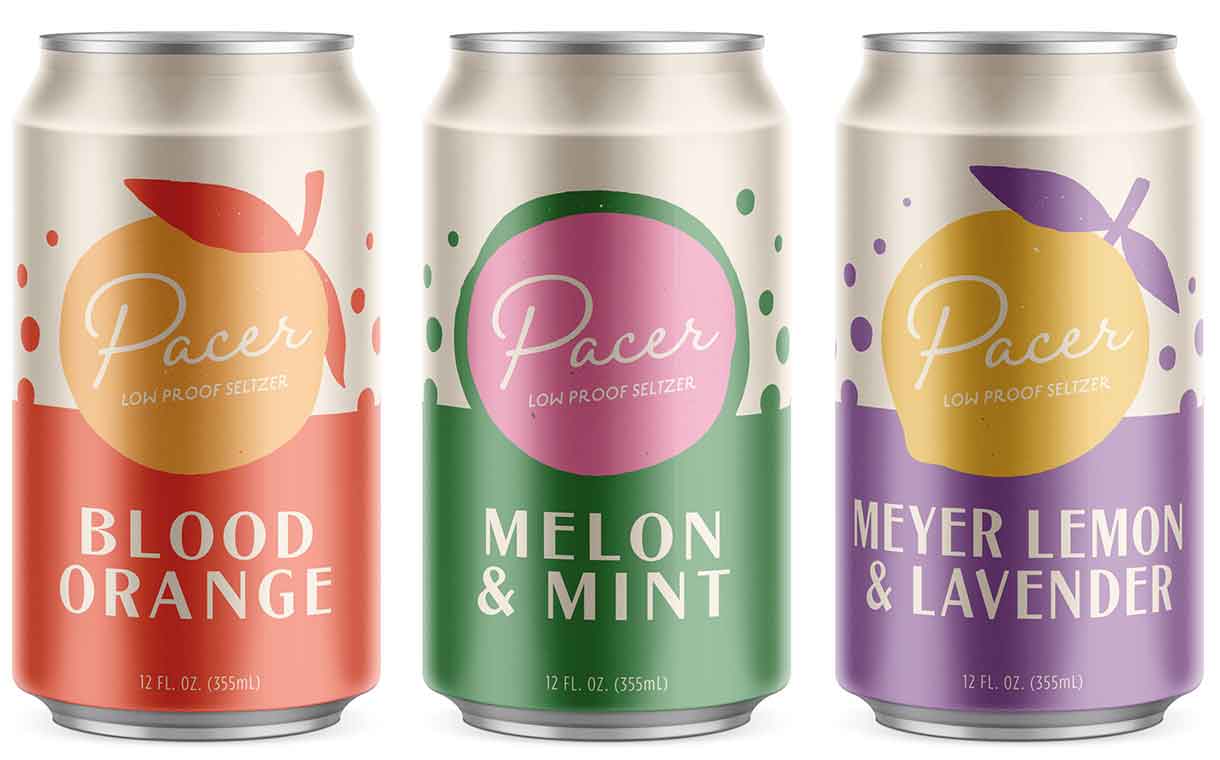
Craft Brew Alliance (CBA), through its pH Experiment business unit, has announced the launch of a new line of low-alcohol, low-calorie seltzers.
Called Pacer Low Proof Seltzer, the range will be available in the US as of July in three flavours: blood orange, meyer lemon and lavender, and melon and mint. With an ABV of 2%, each beverage is gluten-free and contains fewer than 50 calories.
The beverages are the latest innovation to come from CBA’s pH Experiment, which was launched last year and is focused on creating, incubating and accelerating new products that put drinkers’ needs first.
pH Experiment general manager Karmen Olson said: “We already knew moderation was becoming more important to drinkers. What we understood more fully after last year’s research was that moderation means different things to different people in different occasions.
“We heard from many drinkers who said they wanted something that would help them pace themselves to stay in control. With seltzers growing triple digits but available only in non-alcohol or 5% ABV, we saw an opportunity to create a low-proof offering that would allow drinkers to moderate at their own pace.”
Pacer will be available in two pack sizes: a variety 12-pack and a blood orange six-pack.
Last month, pH Experiment released Pre Aperitivo Spritz, which is described as “a distinctively dry botanical bubbly inspired by the classic Italian cocktail”.

Thursday, April 11, 2019

Post-Workout Beer Is Now Officially a Thing

By. Phil Galewitz

MARATHON BREWING JOINS A GROWING NUMBER OF BREWERIES MAKING LOWER CARB BEER TO DRINK WHEN YOU’VE RUN ON EMPTY.

photo courtesy Jamie Taylor
When I received my first bottle of 26.2 Brew last month from Marathon Brewing Co., a subsidiary of Boston Beer Co. (owner of 2019 NY International Beer Competition double gold medal winner Samuel Adams), I knew I couldn’t just pull it out of the refrigerator, plop on the couch next to my pups and enjoy like any other beer.
I had to earn it.
This isn’t just any beer: it’s beer inspired by the Boston Marathon and geared to help runners and others who deserve a drinkable beer for their hard exercise. Some runners might even call it a “recovery beer”—not to recover from a night out partying on the town, but from an hour or two or exercise.
As such, I went out for a run around the spacious Washington D.C. National Mall (think Lincoln Memorial and Washington Monument) near where I work. While 26.2 Brew is named after the official marathon distance, I opted for a 5-mile run that late winter day. It was a good brisk workout in near 50 degree temperature that still had me sweating when completed.
Rather than just reaching for the water cooler when I got back to my office or a bottle of Gatorade, I poured some 26.2 Brew into a glass. The golden hazy ale has just 9 grams of carbohydrates and only 120 calories so it’s a light beer for sure. But its no Miller or Bud Light. Made with Himalayan sea salt and coriander, the beer had some subtle flavors to match.
I’m not saying you could drink 26.2 Brew like water, but it did go down easy and was light enough to easily quench my thirst and then some. I could easily finish a bottle or two as just reward for sweat-filled workout, but without feeling guilty that I was gaining back all the calories I had just burned off.
The 26.2 Brew was released to store shelves nationally the first week in March, and is a new take on a Boston Beer (Sam Adams) ale brewed just for finishers of the Boston Marathon since 2012 and a select few other marathons.  After all, we’re in running season now in the US, and runners can expect to see many local races of all distances in the months ahead.

FEWER CARBS AND CALORIES SHOULDN’T SACRIFICE FLAVOR AND SATISFACTION

Jamie Dowd, Carrie Browne, Jamie Taylor and Beth Mourelatos with 26.2 Brew after running in the Marathon of the Treasure Coast in Stuart, Fl., photo courtesy Jamie Taylor
 The beer was developed by Shelley Smith, a brewer from Boston Beer, marathon runner and triathlon finisher, to provide “purpose and balance for drinkers seeking more.” She says, “As someone who loves beer and running, having the opportunity to brew a beer that helps runners celebrate their hard work was a passion project for me.” Smith is also an advanced Cicerone and manager of research and product Innovation at Boston Beer. "Understanding what is important to runners is what made brewing this beer different from what is currently available. While most brewers are stripping flavor to hit a certain calorie mark, we focused on brewing a beer that not only fits what runners were looking for, but also delivered a great taste." As she developed the recipe, Smith invited other runners—including her brewery teammates as well as Boston Marathon champions Meb Keflezighi and Desiree Linden—to gain insight into what drinkers and athletes want in a beer.Continue below